

Currents Beneath the Surface of Nations
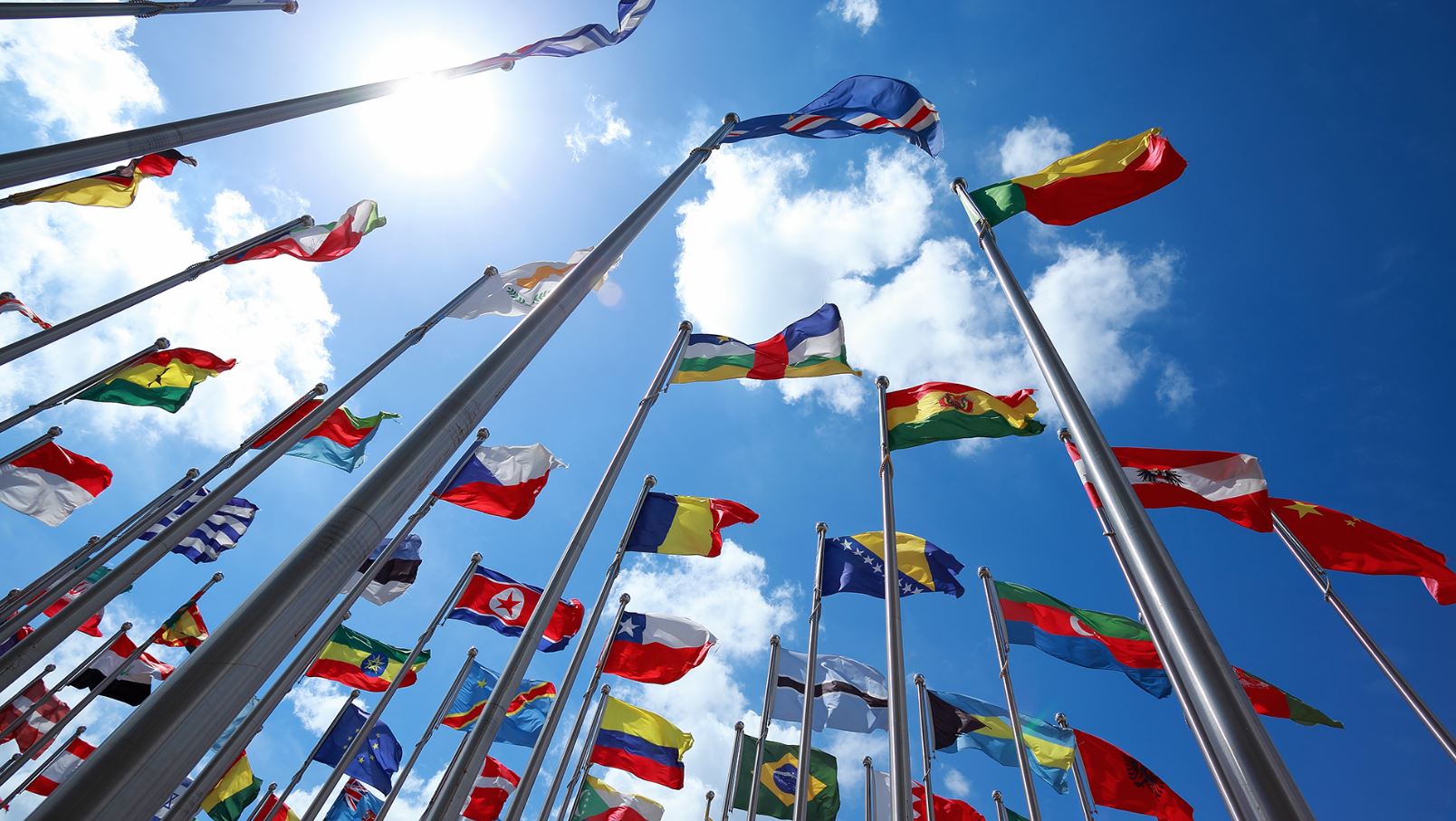
Shifting power, shared crises, and human interdependence shape the emerging architecture of the world
The Fragile Order of Interdependence
The modern world is a network of dependencies so dense that no nation can truly stand alone. Trade, data, and security weave together systems that both empower and constrain. A drought in one region raises prices in another, a conflict on one border ripples through energy markets thousands of miles away. The illusion of isolation has vanished, yet the language of politics still often pretends it exists. Interdependence was once celebrated as a guarantee of peace, the theory that nations bound by mutual benefit would avoid destruction. Reality has proven more complex. Dependency can inspire cooperation, but it can also become a weapon when supply chains turn into leverage and alliances into obligations. The fragile order of interdependence demands new forms of diplomacy that accept vulnerability as permanent rather than temporary. It calls for honesty about how power now travels through networks instead of armies, through algorithms rather than battalions.
To manage such a world requires humility and imagination. Governments accustomed to commanding within their borders must now negotiate across them. Every policy, whether on climate, migration, or technology, contains consequences that spill outward. The boundaries of sovereignty remain, but their meaning changes. Power must learn to share space with influence, and leadership must accept that control often comes not through domination but through coordination. The future of global stability will belong to those who understand that interdependence is not a weakness to escape but a condition to govern wisely.
Economic Gravity and the Drift of Influence
Economic power no longer resides in a single capital. The postwar dominance of one center has given way to a constellation of regional economies that define their own orbits. Asia’s industrial rise, Africa’s demographic growth, and Latin America’s emerging markets have rewritten the geography of opportunity. These shifts redistribute not only wealth but authority. Financial institutions adapt to new hubs, and international forums strain to accommodate voices once ignored. Yet global inequality persists, revealing that influence does not always follow production. The movement of capital often outpaces the movement of fairness, leaving nations rich in resources but poor in decision-making power. The balance of influence therefore depends less on GDP than on the ability to translate economic weight into political credibility.
Supply chains have become both arteries and chokepoints. Nations compete to secure materials vital for technology, from rare earth minerals to microchips. In this race, alliances form around necessity rather than ideology. The struggle for resilience replaces the pursuit of dominance. Countries now measure power not by conquest but by their capacity to adapt, to reroute, and to endure disruption. The global economy thus becomes a landscape of motion, where gravity shifts as innovation migrates. Stability requires acknowledging that prosperity anywhere depends on cooperation everywhere. The challenge is to turn interdependence from risk into rhythm.
The Environmental Threshold
Climate change has transformed the language of global affairs. Once considered an environmental issue, it is now recognized as a security concern, an economic threat, and a moral test. Rising seas redraw borders without consent, forcing migration that treaties did not anticipate. Drought ignites conflict over water rights, and melting ice opens trade routes that were once frozen frontiers. Each consequence links nations in shared vulnerability. The atmosphere ignores passports. Global governance has struggled to match this universality with enforcement. Agreements emerge through diplomacy, yet enforcement falters under domestic pressure. Every summit produces promises, and every promise collides with political reality. The environmental threshold marks the limit of short-term thinking in an interconnected planet. Survival demands cooperation beyond convenience.
Innovation offers hope, but technology alone cannot repair imbalance. Renewable energy transitions require minerals extracted under conditions that test human rights. Carbon markets risk turning morality into commodity. The real measure of progress will be whether societies can align growth with restraint, comfort with conscience. Environmental diplomacy must evolve from negotiation to coordination, from bargaining to shared stewardship. The world cannot afford to treat climate as a backdrop to global affairs. It is the stage itself, and every decision made upon it echoes for generations. Justice for future citizens now depends on whether current ones can redefine prosperity as balance rather than excess.
The Information Battlefield
Power today is contested not only through armies or economies but through information. Digital infrastructure has become the new terrain of rivalry. Networks that connect communities also expose them to manipulation. States and private actors compete to shape narratives, influence elections, and control data flows. The boundaries between propaganda, persuasion, and truth blur under the speed of communication. Algorithms, designed to predict preferences, amplify division. The weaponization of information undermines trust in institutions, turning citizens into targets and facts into casualties. Global affairs must now reckon with the reality that digital sovereignty rivals territorial sovereignty in importance.
Governance of the digital sphere remains fragmented. Some nations treat data as property, others as a public good, and others as a tool of control. The absence of unified norms creates a vacuum filled by corporate platforms whose decisions shape public discourse more than many governments do. The next generation of diplomacy will have to negotiate not just borders but bandwidth, not just treaties but terms of service. Cybersecurity and digital ethics will define alliances as surely as defense pacts once did. The future equilibrium depends on whether humanity can design a system where communication empowers rather than corrodes, where information enlightens rather than inflames. The struggle for truth has become the defining contest of global affairs.
The Shifting Identity of Sovereignty
Sovereignty once meant control over territory, borders, and people. In an interconnected world, it increasingly means the ability to manage complexity. States now share authority with multinational corporations, international organizations, and regional blocs. Sovereignty becomes less about exclusion and more about coordination. Yet this redefinition provokes anxiety, especially among those who see cooperation as dilution of identity. National pride clashes with global necessity. The pandemic revealed how porous sovereignty truly is, as viruses ignored boundaries that politics could not seal. The challenge is to reconcile independence with interdependence, autonomy with alliance.
Small states demonstrate that influence can grow through diplomacy rather than domination. They act as mediators, innovators, and moral voices in disputes where giants stall. Regional unions, though imperfect, show that shared governance can amplify stability rather than erase individuality. The new sovereignty is not weaker but more layered. It operates simultaneously at local, national, and transnational levels. Leaders who understand this fluidity will guide their nations with agility. Those who resist it risk isolation. The concept of sovereignty must evolve from fortress to framework, from possession to participation. The measure of modern leadership is not how firmly it guards its borders but how wisely it navigates connection.
Migration and the Movement of Humanity
Migration is not an anomaly but a constant in human history. What changes are the causes and the scale. Conflict, climate change, and inequality drive millions to move, reshaping societies on both sides of every border. The narrative of crisis often obscures the truth that migration also fuels economies, replenishes cultures, and renews ideas. Yet political rhetoric reduces people to numbers, and numbers to threats. Global affairs must learn to speak of migration not as disruption but as adaptation. The question is not whether movement will continue, but how it will be managed with fairness and foresight.
Integration policies succeed when they recognize migrants as participants rather than guests. Education, legal pathways, and community investment transform migration from emergency to evolution. Destination countries must see inclusion as security, while origin countries need support that prevents desperation from becoming departure. Shared frameworks, like regional compacts and labor mobility agreements, can replace chaos with coordination. Humanity’s movement is the oldest form of globalization, and its management defines civilization’s maturity. Justice in migration is not measured by closed gates but by open opportunities balanced with order. To treat mobility as a liability is to misunderstand the nature of the modern world.
The Future of Multilateralism
Institutions created to prevent war and foster cooperation now struggle under the weight of expectation. The United Nations, World Trade Organization, and other global bodies face legitimacy crises as power diffuses and polarization deepens. Yet dismantling them would leave a vacuum that chaos would eagerly fill. The future of multilateralism lies in renewal, not replacement. Structures built for the twentieth century must adapt to twenty-first-century realities. Representation must reflect demographic and economic change, giving voice to regions long underrepresented. Decision-making must become faster and more inclusive, capable of responding to emergencies before they spiral into catastrophe.
Technology can aid this transformation. Digital diplomacy allows for real-time coordination among nations and civil society. Transparent data sharing can reduce mistrust, and collaborative research can bridge divides. Multilateralism should evolve into networked governance, where flexible coalitions form around issues rather than alliances frozen in history. Climate cooperation, health response, and cyber ethics all demand this agility. The choice ahead is clear: reform institutions to reflect humanity’s interconnection or watch them decay into symbols of nostalgia. The survival of global order depends on cooperation that is both principled and practical, rooted in shared responsibility rather than hierarchy.
The Horizon of Shared Destiny
The story of global affairs is no longer a contest of empires but a negotiation of coexistence. Humanity stands at a horizon where its fates converge more tightly than ever before. Technology unites while dividing, prosperity expands while inequality deepens, and crises multiply faster than solutions. Yet within this tension lies possibility. Every challenge that transcends borders also invites collaboration that redefines them. The horizon of shared destiny calls for imagination equal to the complexity of the world it seeks to govern. Diplomacy must become empathy with strategy, economics must measure sustainability as much as profit, and citizenship must stretch beyond geography to conscience. The future will belong to those who understand that the planet is not a collection of rivals but a shared experiment in survival. Global affairs will remain uncertain, but uncertainty can be fertile ground for wisdom if guided by humility. In the quiet between nations, the next chapter of humanity waits to be written together.