

The Breath That Keeps Democracy Alive
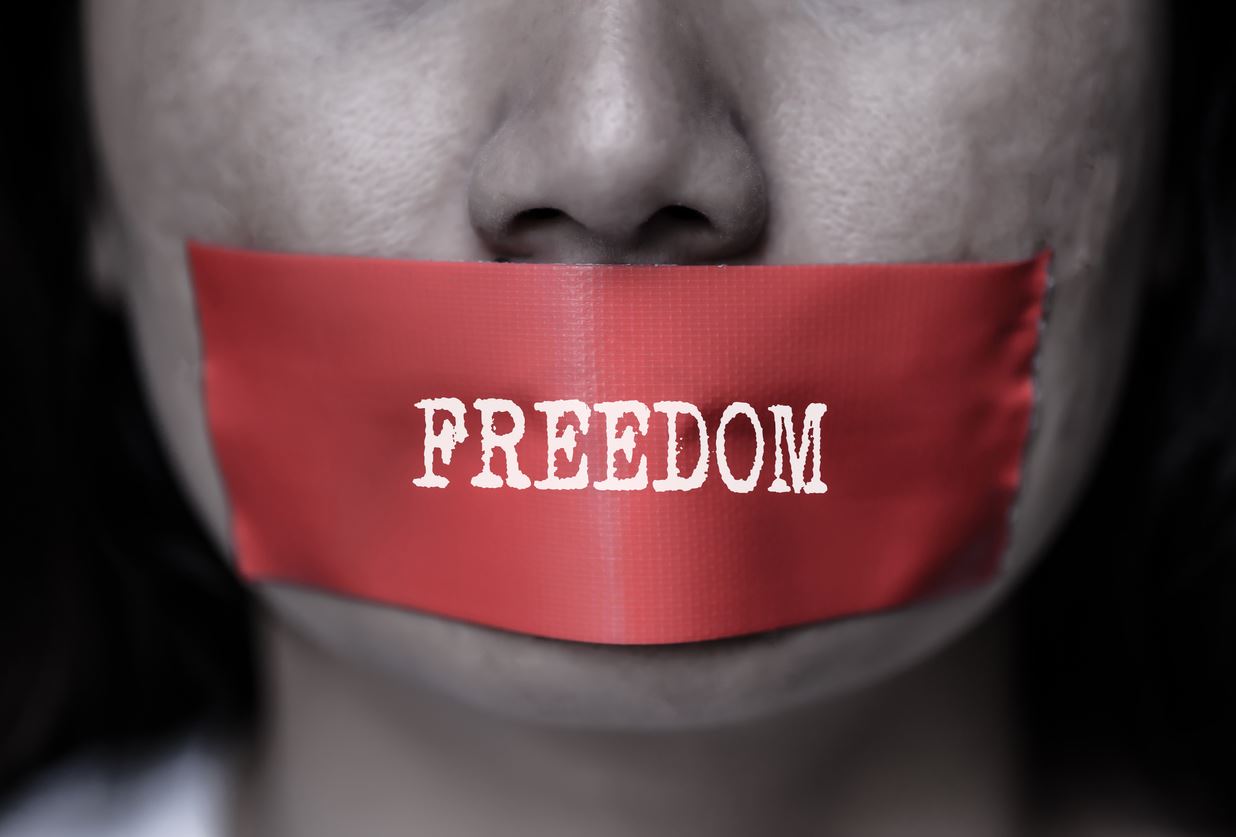
Expression shapes truth, identity, and the fragile balance between liberty and restraint in public life
The Voice That Defines a People
Freedom of speech is more than a legal right; it is the spiritual bloodstream of democracy. It allows individuals to express, question, and challenge the forces that govern them. Without it, citizens become spectators rather than participants in their own society. The right to speak freely transforms governance into dialogue, ensuring that authority remains accountable to the governed. Every movement for justice, from labor rights to civil equality, began with voices that refused silence. Speech is not only communication; it is resistance, creativity, and conscience materialized into sound. It is through speech that societies reveal their soul, exposing both their compassion and their cruelty. The measure of a nation’s freedom can often be found not in how it celebrates agreement but in how it tolerates dissent.
However, freedom of speech does not exist in abstraction. It must be lived, tested, and defended in real environments where power resists criticism. Each generation must rediscover what it means to speak freely, for censorship evolves as language evolves. The capacity to express one’s mind without fear of punishment is not a gift from the state but a condition of humanity. When speech is free, thought is fearless. When speech is constrained, truth retreats into whispers. The voice that defines a people must therefore remain vigilant, for silence is rarely voluntary in a society that values obedience over dialogue.
The Historical Journey of Expression
The struggle for free expression stretches across centuries and civilizations. Ancient philosophers defended the right to reason openly even when authority demanded conformity. The early press in Europe, born amid censorship and monarchy, became the first tool through which ordinary citizens could challenge the powerful. Every reform that reshaped modern governance, from constitutional democracy to universal suffrage, was preceded by the battle to speak without suppression. In each era, rulers have tried to define the boundaries of acceptable speech, claiming to protect order while protecting themselves. The history of free speech is thus a history of courage, written in the words of those who refused to be silenced even when silence promised safety.
In the modern world, this right took constitutional form. The idea that government must not restrict expression became a pillar of democratic law. Yet laws alone cannot secure liberty; they only reflect the will of the people who believe in it. The true defense of expression lies in culture, not statutes. A society that fears disagreement cannot preserve freedom even with perfect legal systems. History teaches that every generation inherits both the freedom to speak and the responsibility to protect it. The journey of expression is continuous, a thread that connects ancient debates to the modern age of digital communication, where words travel faster but truth struggles to keep pace.
The Ethics of Unrestricted Speech
The freedom to speak includes the freedom to offend, but it also includes the duty to understand consequence. Ethical expression asks not whether one can speak, but whether one should. The boundary between liberty and harm is often blurred by passion, ideology, or ignorance. A society that values open discourse must also cultivate restraint born of empathy. The ethics of speech are not imposed by law but shaped by conscience. True freedom thrives not in recklessness but in responsibility, the awareness that words can heal or destroy with equal force. Ethical discourse does not seek to silence the speaker but to elevate the conversation.
In democratic societies, this ethical balance defines maturity. When citizens learn to disagree without dehumanizing, liberty gains depth. When rhetoric replaces reasoning, freedom becomes noise. Ethical communication requires courage to challenge, patience to listen, and humility to learn. The goal is not uniformity of opinion but respect for diversity of thought. Free speech must never become the privilege of the loudest or the cruelest; it must remain the shared right of all who seek understanding. Ethics in speech preserve its dignity, reminding us that expression without compassion becomes arrogance disguised as liberty.
The Role of the Press as the People’s Mirror
The press stands as the institutional guardian of free expression. Journalists serve as translators between power and the public, converting complexity into comprehension. When they perform their duty with honesty, they keep governments accountable and citizens informed. A free press ensures that truth remains visible even when inconvenient. Yet this freedom is often contested by those who fear exposure. In many nations, reporters face intimidation, censorship, or manipulation disguised as patriotism. The erosion of journalistic independence is an early symptom of democratic decay. When truth becomes negotiable, justice becomes impossible.
Modern journalism faces new challenges in the digital age. The flood of misinformation blurs the distinction between fact and opinion, creating confusion where clarity once stood. Ethical reporting must therefore evolve, maintaining transparency in methods and intentions. Trust is earned not through authority but through accuracy. The press must remember that its loyalty lies not with the powerful but with the public. In serving truth, journalists protect the freedom of speech for all, ensuring that power hears what it does not wish to hear. The press is not the enemy of the state but the conscience of society, reflecting its values, contradictions, and potential for renewal.
The Digital Revolution and the New Public Square
The internet has transformed expression into a global phenomenon. Voices that once struggled to be heard now resonate across continents. Social media platforms have become the new public square, where ideas collide and cultures intersect. Yet this revolution carries both liberation and peril. Digital spaces democratize speech but also amplify distortion. Algorithms prioritize engagement over truth, creating echo chambers that reward outrage and punish nuance. The freedom once envisioned as a bridge between communities has become, at times, a battlefield of misinformation. The digital age forces society to reconsider what freedom of speech means in a world where every citizen is both a broadcaster and a publisher.
Governments now face the challenge of regulating online speech without suppressing legitimate expression. Content moderation, privacy rights, and misinformation laws spark debates about where freedom ends and responsibility begins. The solution lies not in censorship but in education. Citizens must learn to navigate digital landscapes critically, distinguishing between voices of reason and manipulation. Free speech in the digital era requires literacy, patience, and empathy. It demands that we use technology not as a weapon of division but as a tool for dialogue. The digital revolution offers humanity a mirror; how we speak within it reveals who we are becoming.
The Tension Between Security and Liberty
Every society that values freedom must confront the tension between liberty and security. In times of crisis, governments often justify restrictions on speech in the name of protection. History shows that such restrictions, though temporary in intention, often linger beyond necessity. The fear of instability becomes the pretext for silence. Yet security built on censorship is fragile, for it breeds ignorance rather than unity. A government that hides truth for safety sacrifices both. True security emerges not from silencing dissent but from addressing its causes. When citizens can speak without fear, they expose problems before they erupt into unrest. Freedom of speech, therefore, is not the enemy of order but its foundation.
The test of any democracy is how it treats speech in moments of fear. During peace, tolerance is easy; during turmoil, it becomes proof of principle. Ethical governance must resist the temptation to equate criticism with disloyalty. The strength of a nation lies not in uniformity but in its ability to withstand disagreement. Liberty and security are not opposites but complements when guided by integrity. By allowing free debate, governments prevent extremism from festering in silence. The price of liberty is risk, but the reward is resilience. A society that fears expression will one day fear itself.
The Role of Education in Sustaining Expression
Education shapes how individuals understand and exercise their rights. Teaching the principles of free speech must go beyond legal frameworks; it must address the moral and civic responsibility that accompanies expression. Schools and universities are laboratories of dialogue where ideas can clash constructively. Students must learn not only to articulate but to listen. Civic education that emphasizes critical thinking protects democracy from manipulation. When citizens understand how to question authority and verify information, they strengthen the foundation of liberty. Education ensures that freedom of speech remains not a privilege for the informed but a universal tool for empowerment.
In many societies, educational institutions face pressure to avoid controversy. Yet avoiding difficult topics weakens intellectual resilience. Exposure to diverse opinions teaches tolerance, while censorship teaches fear. The duty of education is to prepare individuals to navigate disagreement with wisdom rather than hostility. The classroom should mirror the public sphere, a space where freedom and responsibility coexist. When citizens learn to value expression as both a right and a discipline, the culture of free speech becomes self-sustaining. Education, in this sense, is not preparation for democracy; it is democracy in practice.
The Global Conversation on Expression
Freedom of speech transcends borders, yet its practice differs across cultures. Some nations embrace it as an absolute value, while others view it as subordinate to harmony or tradition. The global conversation on expression reflects humanity’s diversity of belief. International organizations advocate for free speech as a human right, but enforcement remains uneven. Authoritarian regimes suppress it to maintain control, while polarized democracies abuse it to justify hostility. The universality of speech depends not on uniformity but on shared respect for human dignity. Every voice, regardless of nation, carries the right to truth.
Globalization complicates this dialogue. Speech in one country can provoke unrest in another, raising questions about jurisdiction and ethics. The challenge is to defend expression while preventing its misuse to incite violence or hatred. International cooperation on digital governance, media standards, and human rights can strengthen this balance. The goal is not to create identical systems but to affirm common principles: that expression must enlighten, not enslave. In protecting free speech globally, nations protect the conscience of humanity itself. The conversation must remain open, for silence in one corner of the world weakens liberty everywhere.
The Endless Dialogue of Freedom
Freedom of speech is not a finished achievement but an ongoing dialogue between power and conscience. It requires vigilance from every generation that inherits it. The value of expression lies not in its perfection but in its persistence. Each word spoken freely reinforces the invisible thread that binds citizens together in mutual respect. When individuals defend the right of others to speak, even those they oppose, they affirm their own humanity. The health of democracy depends on this reciprocity. To silence one voice is to weaken all. The endless dialogue of freedom continues, not in the halls of power, but in the daily courage of people who choose truth over comfort, and conscience over silence.